



Everything You Never Knew You Wanted to Know About the Sheep Behind Your Alpkit Jumper
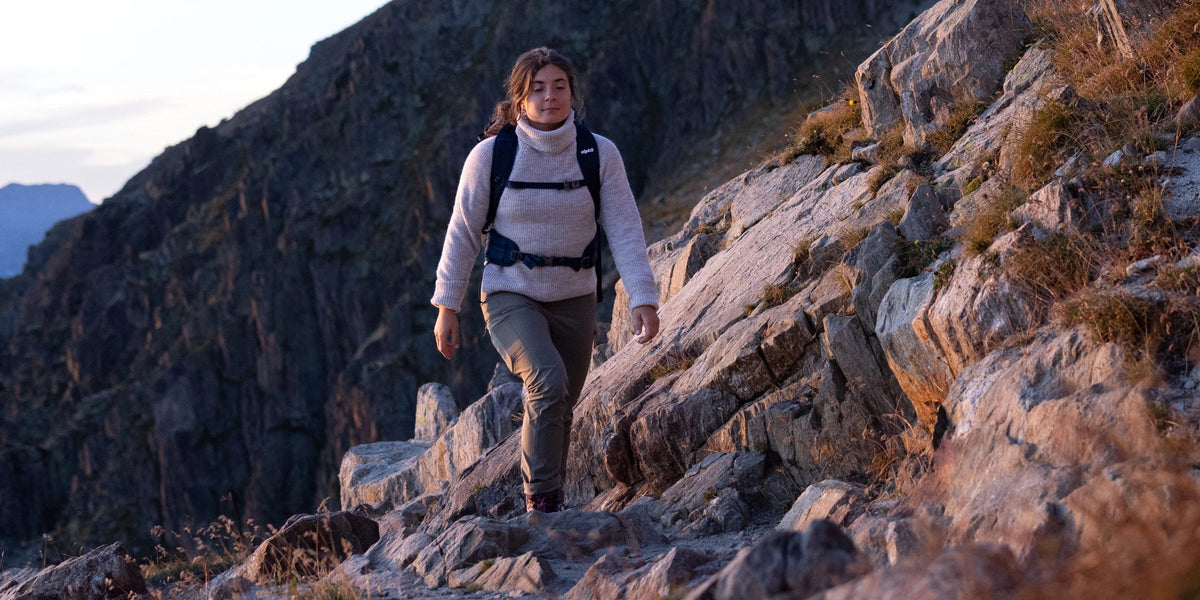



A deep dive into British wool, the hardy breeds that produce it, and why these sheep are basically outdoor enthusiasts themselves
When you pull on your Pennine or Iona jumper, you're wearing the product of some seriously tough customers. British sheep breeds have spent centuries perfecting the art of not caring about terrible weather. They stand on windswept fells in horizontal rain, looking vaguely disappointed at best.
These are the sheep that make your jumper possible. Here's everything you never knew you wanted to know about them.
Our UK-made Pennine and Iona jumpers use British Wool Board Accredited wool sourced and spun by Shepley Yarns, a family-owned business based in Saddleworth in the heart of the Pennine hills. Their family name literally derives from Old English meaning 'the shepherds' valley' - which seems remarkably appropriate for people who've spent 200 years working with wool.
All of the wool in our Pennine collection originates from two specific British breeds: Suffolk and Jacob sheep. These sheep roam freely on the fells and downs of the British Isles, thriving on a simple diet of grass, water, fresh air and sunshine.
One of Britain's most distinctive breeds, Suffolks are immediately recognisable by their solid black faces and legs with no wool on the head. Originally bred in Suffolk (unsurprisingly) by crossing Norfolk Horn ewes with Southdown rams in the early 1800s, they're now one of the most popular breeds globally - but our wool comes from British flocks.
Suffolks produce high-quality fleece that's fine, dense, and elastic - perfect for clothing that needs to move with you. The wool typically measures 25-33 microns in diameter, giving it excellent durability while remaining comfortable for midlayers. They're hardy, adaptable sheep that thrive across diverse British landscapes.
Wool characteristics: Fine, dense, elastic, durable. Excellent bounce-back and resilience.
One of Britain's most ancient and distinctive breeds - striking piebald sheep with black and white fleeces and often sporting two, four, or even six horns. Jacobs are a primitive breed that's changed little over centuries, producing wool in natural colours that range from pure white through various shades of grey to deep black.
Jacob wool is particularly special for undyed products like our Pennine and Iona jumpers. The natural colour variation within each fleece - and between individual sheep - creates authentic, varied tones that celebrate wool in its natural state. The wool is medium-grade (around 27-35 microns), soft enough for comfortable wear but robust enough for hard-wearing outdoor clothing.
Wool characteristics: Natural colour variation, medium-soft, excellent for undyed products, traditional British wool.
This specific combination gives our jumpers the best of both worlds:
Here's the satisfying answer: approximately one sheep makes one jumper.
A typical Suffolk sheep produces around 2.5-3.5kg of fleece per year, while Jacobs produce 2-3kg (that's the greasy weight before cleaning). After scouring (washing to remove dirt, vegetation, and lanolin), you lose about 30-50% of that weight. So one sheep gives you roughly 1-2kg of clean wool per year.
A medium-weight wool jumper like Pennine uses approximately 800-1200g of yarn, depending on size. Factor in some wastage during manufacturing, and you're looking at one sheep, one shearing, one jumper.
This means your jumper represents:
When you think about it like that, £100-odd for a jumper seems quite reasonable. You're basically paying for a year of a sheep's life, plus all the human skill involved in transforming fleece into knitwear.
Suffolk and Jacob sheep, like all British breeds, are excellent foragers. They're adaptable grazers that thrive on varied British pasture and upland vegetation.
Grasses: The main course. Both Suffolks and Jacobs are efficient grazers on a variety of British grasses. They can graze quite short grass - down to about 5cm - making them effective at maintaining pastures. Favourite varieties include ryegrass, fescues, and various meadow grasses.
Clover and legumes: Protein-rich plants that sheep actively seek out. Clover in particular is a favourite and provides excellent nutrition.
Herbs and wildflowers: Jacob sheep, being a more primitive breed, are particularly good at thriving on herb-rich pastures. They'll browse a wide variety of plants that other grazers might ignore.
Heather and moorland vegetation: While Suffolks are more lowland sheep, Jacobs adapt well to upland grazing and will browse heather and rough vegetation.
An adult Suffolk eats approximately 2-3% of its body weight daily in dry matter. For a 70-80kg Suffolk, that's about 1.5-2.5kg of dry vegetation per day, or roughly 550-900kg per year. Jacobs are smaller (50-60kg) and eat proportionally less, around 1-1.5kg daily.
To put it another way: your jumper required one sheep to eat approximately half a tonne of British vegetation over the course of a year. That's a lot of grass.
The British Wool Board Accredited wool for our Pennine and Iona jumpers comes from Suffolk and Jacob sheep roaming freely across the British Isles. While you might not encounter them on every hillwalk (they're less common than upland breeds like Herdwicks or Swaledales), you'll certainly see them if you know where to look.
Our yarn comes from Shepley Yarns, based right in the heart of the Pennine hills at Saddleworth - even though the specific breeds (Suffolk and Jacob) differ from traditional Pennine breeds like Swaledales. This area straddling the Yorkshire-Lancashire border has been sheep country for over a thousand years. The name Saddleworth itself comes from the Old English for 'sheep-washed' or 'sheep-cleansed'.
While not quite as extreme-weather-adapted as upland specialists like Herdwicks or Blackface, both Suffolk and Jacob sheep are genuinely hardy British breeds. Let's see how they would stack up as Top Trump cards.
Suffolks are robust, adaptable sheep originally bred for British conditions. They're not soft southern creatures despite their East Anglian origins. They handle British winters and summers comfortably, their dense fleece provides excellent insulation. Natural lanolin gives water resistance and they manage British rain admirably thriving from lowland pastures to upland grazing. This versatility is why they're found nationwide.
Weather Resistance: 7/10 Temperature Tolerance: 7/10 Foraging Ability: 6/10 Terrain Adaptability: 8/10 Fleece Quality: 9/10 Wool Fineness: 8/10 Fleece Weight: 7/10 Heritage Factor: 6/10 Hardiness Overall: 7/10
Jacobs are a primitive breed - essentially unchanged for centuries - which means they're naturally hardy. The piebald fleece with its natural variation includes higher lanolin content for weather protection. Jacobs thrive on rough grazing where pickier breeds struggle. Primitive breeds retain the survival skills that more intensively bred sheep have lost. They're basically the outdoor enthusiasts of the sheep world - happy on rough terrain, don't mind the weather, get on with it.
Weather Resistance: 8/10 Temperature Tolerance: 8/10 Foraging Ability: 9/10 Terrain Adaptability: 9/10 Fleece Quality: 8/10 Wool Fineness: 6/10 Fleece Weight: 5/10 Heritage Factor: 10/10 Hardiness Overall: 8/10
Sheep bred for British conditions produce wool adapted to British weather. Suffolk and Jacob wool provides:
Your jumper works well in British conditions because the sheep that produced it were designed by centuries of breeding to handle British conditions themselves.
Wool fibres have a natural waviness called crimp. British upland wool typically has 8-12 crimps per inch. This crimp is what creates the tiny air pockets that make wool such an excellent insulator. More crimp = more trapped air = better insulation.
The harsh British climate has bred sheep that produce wool with excellent crimp structure - they needed it to survive.
British sheep produce wool with high lanolin content - the natural waxy substance that makes fleece water-resistant. This is why minimally processed British wool (like in our undyed Pennine and Iona) has that slightly waxy feel when new and provides natural weather resistance.
British upland wool typically measures 25-35 microns in diameter (compared to merino's 18-24 microns). This coarser structure makes it:
It's not quite as soft against bare skin as merino, which is why it's perfect for midlayers rather than base layers.
This is where Jacob sheep particularly shine. Jacob fleeces naturally range from pure white through various shades of grey to deep black, often with multiple colours on the same sheep. Suffolk wool is typically white to cream.
To celebrate the natural qualities of pure wool, our range includes natural undyed colours, spun using the original colours of British wool pure breeds - particularly showcasing Jacob's distinctive natural tones.
Our undyed Pennine and Iona jumpers celebrate this natural variation. Each batch has slightly different tones depending on the specific Suffolk and Jacob sheep whose wool was used - no two jumpers are exactly identical.
The Jacob contribution is particularly important here: their naturally varied fleece creates authentic colour variation without any dyes. Mix in Suffolk's creamy-white wool, and you get the natural palette of British wool in its honest, minimally processed state.
This is a feature, not a bug. You're wearing authentic British wool from Suffolk and Jacob sheep in its natural state.
Shepley Yarns combines age-old techniques and experience in the wool industry with a passion for sustainable, renewable fibres. When you're working with wool for two centuries, you learn a thing or two about how to process it properly while preserving its natural qualities.
The sheep that provide wool for our jumpers are sheared in the Spring months - typically May to early June in the UK. This timing is essential: after the risk of severe weather has passed but before temperatures get too hot.
Shearing isn't just about collecting wool - it's an essential part of good farming husbandry. Domestic sheep have been selectively bred for thousands of years to produce more wool than their wild ancestors. Unlike wild sheep that shed their fleece naturally, domestic sheep keep growing wool and need to be shorn annually for their welfare.
An unshorn sheep would:
Spring shearing helps rid sheep of potentially damaging infections such as blowfly strike and keeps them cool during the summer months. Shearing is essential animal welfare, not optional.
A skilled shearer can shear a sheep in 2-3 minutes, removing the entire fleece in one piece. This requires significant skill - you're wielding sharp blades close to an animal's skin while it's wriggling. Professional shearers are seriously impressive to watch.
After shearing, fleeces are:
From sheep to jumper: approximately 4-6 months, all within the British Isles.
This gets into slightly more serious territory, but it's important: British upland sheep aren't just producing your jumper. They're maintaining landscapes.
Sheep grazing prevents upland areas from becoming overgrown with bracken and scrub. This maintains the open moorland that's such a characteristic feature of British uplands - and that provides habitat for ground-nesting birds like curlew, golden plover, and lapwing.
Properly managed sheep grazing creates a mosaic of different vegetation heights and types, which supports diverse plant and insect communities. Too much grazing is damaging, but so is too little - the balance matters.
The patchwork of stone walls, the network of sheep tracks across fells, the hefted flocks that have occupied the same ground for centuries - this is cultural heritage as much as agricultural practice. When you walk British uplands, you're walking through a working landscape shaped by sheep farming.
Upland sheep farming supports rural communities in some of Britain's most remote areas. It's often economically marginal - farmers do it because it's their heritage and their way of life as much as for profit. Supporting British wool is supporting these communities.
Your Pennine or Iona jumper represents:
Next time you're walking British hills and valleys, look out for sheep. You might spot distinctive black-and-white Jacobs with their multiple horns, or solid-black-faced Suffolks grazing peacefully. These are the breeds - among others across the British Isles - producing wool that's been carefully selected, processed by craftspeople who've been working with British wool since the early 1800s, and made into the jumper keeping you comfortable.
Their fleece - adapted over centuries to handle British weather, processed with 200 years of expertise, certified by the British Wool Board - is what you're wearing.
We think that's pretty special.
Pennine Mens Wool Jumper - Made in the UK from British wool
Iona Womens Wool Jumper - Made in the UK from British wool
Plus our full range of wool midlayers including Norge, Stora, and Rago.
Read more about why wool makes such brilliant outdoor clothing and our commitment to responsible wool sourcing.