



What to Wear for Stand-Up Paddleboarding
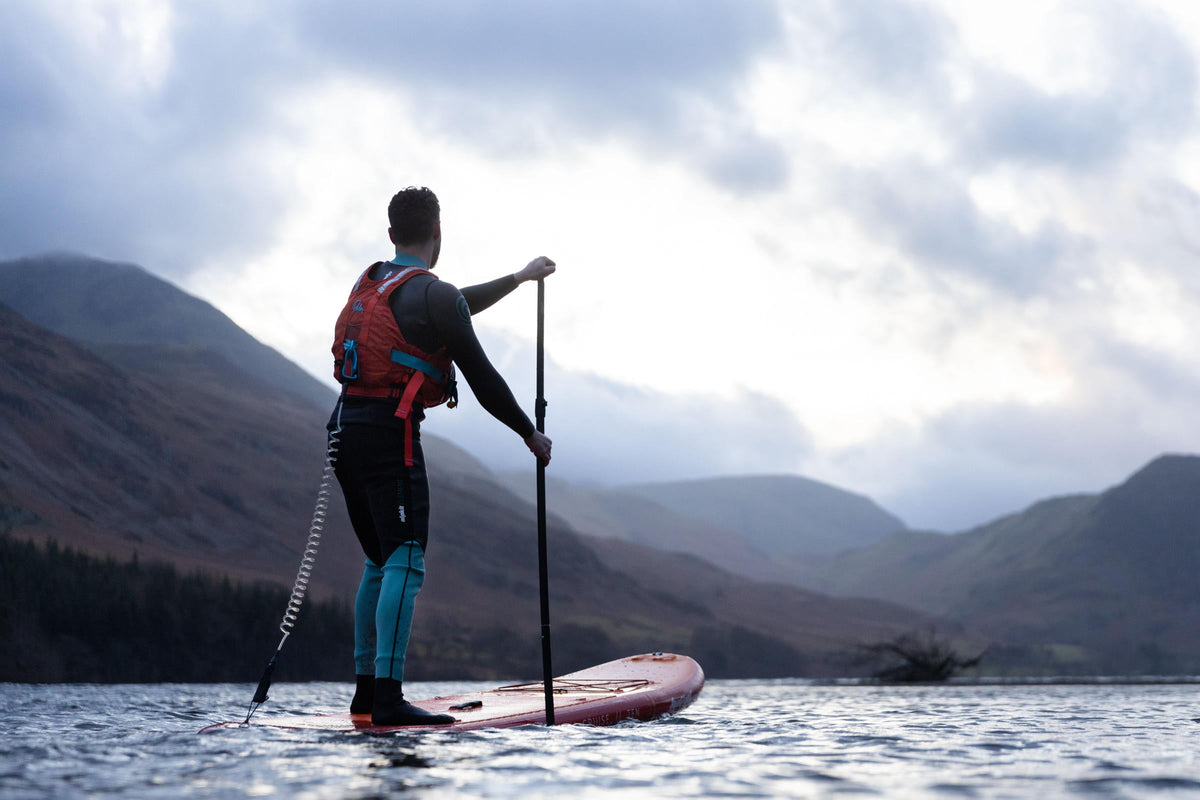




From wetsuits to changing robes, discover what to wear paddleboarding in all seasons. Layer smart for warmth, comfort and flexibility on the water.
Layering as a solution to maintaining thermal comfort is as valid bobbing around in the water as it is when walking in the hills. Whether you are canoeing, kayaking or stand-up paddleboarding layering is the key to staying comfortable during your activity. For a full overview of paddle sports at Alpkit, see our paddle hub:
Layering for water based activities is particularly interesting as you have two opposing strategies:
You know you are going to get wet so there is no point in fighting it. Wetsuits fall into this category and work by trapping a thin layer of water next to your skin, so getting the fit right matters: see our wetsuit fitting guide if you're unsure what to look for. In warmer weather a swimsuit, pair of jammers or swim shirt might be all you need on your paddleboard. In cold weather you will be better off in a fleece lined wetsuit.
You love watersports but you just want to stay dry. You might think that's an impossible ask, but drysuits were invented for you. Thanks to tight silicone seals around your neck, wrists and ankles, waterproof zips and taped seams you stay nice and dry even if you fully immerse yourself. It is the expensive option, and you do lose some flexibility of movement, but they do offer the ultimate dry solution. What you wear under your drysuit will be important to manage heat and moisture.

The challenge for our layering system is waterproofing, windproofing, heat management, insulation against full body soakings, adequate venting and insulation. Many of these challenges are shared with our layering strategies for hillwalking, with some key differences that effect water sports like canoeing, kayaking, and stand-up paddleboarding:
The main distinction is that water sports carry the risk of full immersion and getting completely soaked. Hillwalking layers need to be water-resistant, but typically don't require full waterproofing since you're unlikely to be submerged. Water sports call for waterproof outer shells and accessories that are designed to be immersed.
On exposed water, you cannot escape the effects of air moving over the water surface. The convective cooling effect of the wind is amplified by evaporation of spray on your skin resulting in a 'feels-like-temperature' substantially lower than the actual temperature.
You can generate a lot of heat when fully wrapped up in a dry cag or wetsuit, even when in a seated paddling position. It is not always appropriate to vent, especially on fast moving water where the risk of immersion at any moment is greater. Appropriate choice of base and midlayers can help to manage moisture during activity until you have the opportunity to safely dump that heat.
Paddlers need softshell or stretchy layers that allow uninhibited torso rotation and freedom for the paddling motion prioritising flexibility, breathability and freedom of movement.
Paddlers are exposed to reflection from the water surface. Look for layers with UPF 50+ protection from harmful UV rays.
Our extremities are often exposed to the worst of the weather and play a large part in our perception of comfort. It is important to make sure we show them some love
With strategic layering, you can comfortably and safely enjoy paddle sports through a wide range of conditions. This includes choosing a wetsuit that is designed for paddling movements, breathable wicking layers, insulation that can be added/removed, and protective shells to prevent chills from wind and spray.

When getting off the water after a paddle, having the right layers to throw on is crucial for staying warm and comfortable. Here are some excellent options:
A large towel or a changing robe is perfect for quickly wrapping up in after a paddle. Changing Robes in particular offer a convenience that is hard to beat. Look for ones made from cozy materials like fleece or microfiber that insulate while allowing airflow. Many have handy waterproof outer layers as well. Changing robes have clever designs that let you easily change underneath them. Stay warm when you get off the water with:
At its core, layering involves using multiple lightweight garments that trap heat far better than one thick layer. This simple approach provides exceptional warmth and versatility, allowing you to easily adjust to changing conditions. By adding or removing layers, you can stay perfectly comfortable before, during, and after your activity.