







From off-road wheelchairs to inclusive mountain bike racing, the Foundation supports projects that make outdoor adventure genuinely accessible to everyone.
There's an assumption built into outdoor adventure: that the person doing it can get there, move around, and go as far as the terrain demands. For many people, that assumption is wrong. A path with steps excludes a wheelchair user. A walking group with no guiding support shuts out someone living with sight loss. A race series with one category for able-bodied riders tells everyone else they're not quite the target audience. Some of the projects the Alpkit Foundation has supported exist simply to fix that.
Walking by feel

Warwickshire Vision runs services for people living with sight loss across the county. Louise, who leads their community programmes, spotted a gap: there was no walking group specifically designed for visually impaired people in the area. The Foundation supported her in setting one up.
The club runs 48 weeks a year in and around Warwick. Volunteers provide sight guiding for members and support for guide dog users. It's open to all abilities — whether members want to walk briskly or take it slowly.
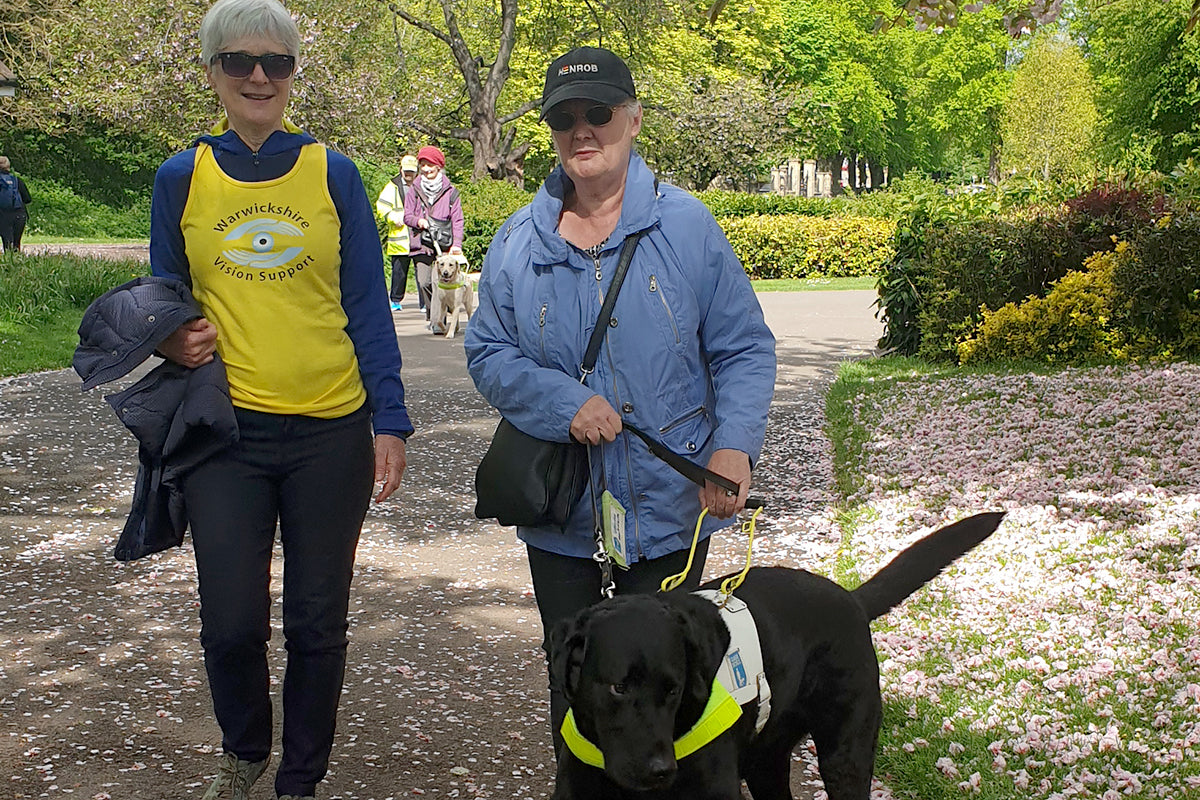
"Coming together weekly provides company and conversation, unites communities, broadens horizons, allows for exploration and appreciation of the natural world and ultimately, improves their physical and mental wellbeing. We are aiming to have upwards of 20 members by the end of 2022, and we are actively seeking to replicate this model in other parts of Warwickshire." — Louise, Warwickshire Vision
Pathway to the lodge

The Shire at Crockermoor CIC in Dorset is a day service for adults and children with learning disabilities and mental health issues, using nature and animal-assisted therapy. The site had installed a Sensory Lodge — a quiet space for all attendees, including local SEN schools — but the path to reach it was uneven and waterlogged, making it effectively inaccessible to wheelchair users.

Pip, the Director, applied to the Alpkit Foundation for support towards installing a wheelchair-accessible pathway to the lodge. The work was completed and the path has been in daily use since.

"The new pathway has now provided the opportunity for all individuals, including wheelchair users, to access the Lodge safely so that they too can benefit from the range of opportunities on offer. It really has put enormous smiles on all the faces of the attendees." — Pip, The Shire at Crockermoor
Wainwright's view

Orrest Head, above Windermere, is where Alfred Wainwright first came to the Lake District fells. The view from the top inspired a lifetime of walking and writing that drew generations of people into the mountains. But for many visitors, the path to the summit was impassable: steep steps, rocky ground near the top, a waterlogged summit, and kissing gates that stopped wheelchairs and pushchairs before they began.
Marian Jones, Area Ranger for the Lake District National Park Authority, applied to the Alpkit Foundation for support towards making the route accessible. The project created a new Miles Without Stiles path using an historic carriage drive, improved the summit surface, added seating at rest points and installed new waymarking throughout. A Foundation award helped fund work with National Park Ranger Apprentices to plant a native hedge along the new path section — a hedge that was, in fact, the condition on which the landowner gave permission for the path to exist at all.

Since the route opened, a survey showed that 15% more visitors with limited mobility are now reaching the viewpoint. Nearly one in five visitor groups includes someone with a mobility aid or a small child in a pushchair. The number of people experiencing difficulties on the path dropped from 21% to 5%. 85% of those surveyed felt physically better after their visit. 97% felt mentally better.
"A wider range of people will be able to enjoy the inspirational view and claim Orrest Head as their first Wainwright. This should include families with pushchairs and people with limited mobility, where the physical terrain previously prevented them from accessing the viewpoint."

On the water
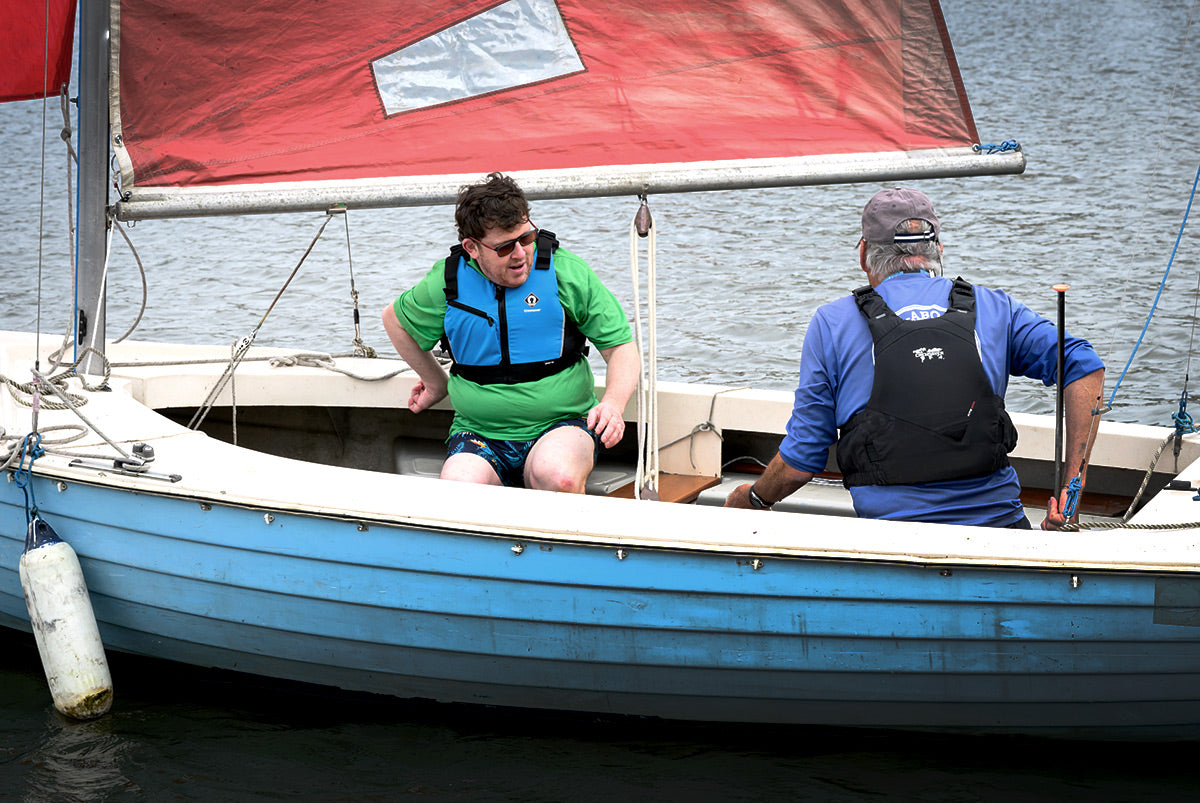
Cerebral Palsy Plus is a Bristol-area charity working with children and adults with cerebral palsy and their families. The condition is lifelong and presents real barriers to outdoor access, often compounded by co-existing conditions such as learning disability, epilepsy, speech impairment or joint pain. Getting out on the water is not something many of their members had imagined doing.
The charity ran an accessible sailing event at Bristol Harbour. With a Mobiloo on site, a hoist available for boat transfers and transport support laid on for those who needed it, 90 people took part — including 17 powerchair users, more than any previous event. Sailing, paddling, powerboat trips and fully wheelchair-accessible river boat rides were all on offer.
"Many of our members have a complex disability and could never have imagined being able to sail. We also had 17 powerchair users attend this year's event, more than ever before. One of the things that shone through is how much our members enjoyed the social side of the day as much as the sailing itself. They really relish the opportunity to have fun in the company of their peers who have a shared understanding." — Karen, Cerebral Palsy Plus
On the mountain

Mountain bike racing has always had a single category problem. MTB4All, organised by endurance cyclist Vedangi Kulkarni, set out to change that at the Nevis Range in Fort William. The race was designed from the start to be genuinely inclusive: categories for non-binary riders and adaptive mountain bikers, a course built around features that either have a B-line or are rollable, and a track that offers a meaningful challenge to experienced riders without closing the door to anyone else.

The Alpkit Foundation provided support towards the operational costs. Profits from the event went to Wings For Life and spinal cord injury recovery fundraisers, as well as Lochaber Mountain Rescue.

The Alpkit Foundation supports projects making the outdoors genuinely accessible and inclusive across the UK. If you run a project doing this kind of work, find out how to apply.