





The Annapurna circuit demands precision. Packing light but right means finding the balance between survival and soaring views along Nepal’s sacred paths.
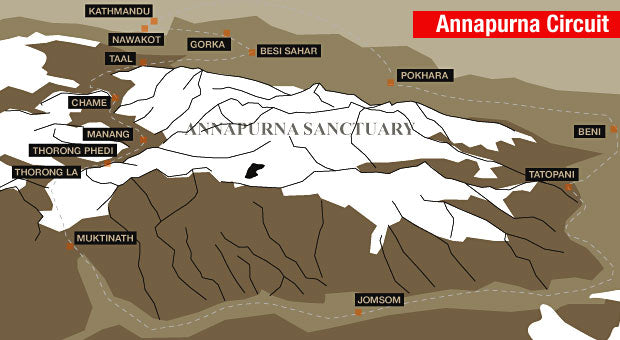
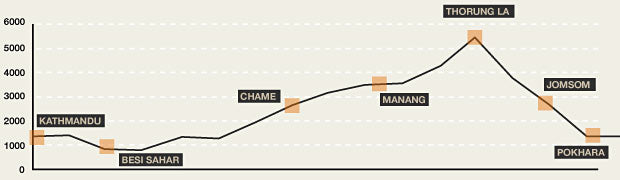
The Annapurna Circuit is one of the classic Himalayan itineraries. Most likely you will have arrived in Kathmandu, the starting point for many Himalayan adventures, but the proper trekking starts only when you reach Besi Sahar. The trek is normally made in 21 days and passes close to some spectacular mountains such as Dhaulagiri, Machhapuchhre, Manaslu and of course Annapurna itself. The high point, if you will excuse the pun, is crossing the Thorung La Pass at 5300 metres before descending into the Kali Gandaki Valley. The trek is still challenging despite improvements to roads and infrastructure in recent years with many steep climbs and descents, obviously all at altitude. Alpkit Col completed the Annapurna Circuit earlier this year as he tried to keep up with the Yak Attack mountain bike race! Here are his thoughts on kit suitable for the trek. If you're planning your own multi-day adventure, browse our trekking pages for more route inspiration and kit advice.
Sleeping bag for the Annapurna Circuit
The Yak Attack took me from Kathmandu and around the Annapurna Cicuit over 12 days at the start of March, so it wasn't too big a stretch to be using a sleeping bag for. I didn't find using a bag for this length of time caused any discomfort. I don't know if this is because I was just tired at the end of each day, but as a kid having spent 2 weeks every summer camping you kind of just get used to it. Generally sleeping bags tend to be pretty snuggly. I took a sample Alpkit synthetic sleeping bag, I'm not too sure what the comfort rating was, probably about +2, but I was staying in tea houses so for the majority of the trip I was fine.
Conditions around the circuit were if anything warmer than I expected, the 4 days in the lowlands before getting to the trail were hot, but even on reaching the lower snowline at about 3000m I found it warm enough in the sun to wear shorts and t-shirt while walking. Higher than this it started to get a bit chilly, especially when sitting around in the evenings, so in terms of the nights there was a real swing from warm to cold. The coldest was at Thorong Phedi, 4450m, when temperatures dropped to at least -5 or so. Due to a 3.30 am start I slept fully clothed and would have felt the cold if I hadn't. Personally I would have been happy in a decent -5 rated bag such as a SkyeHigh 600.
When at altitude you have got to be careful with the effects, there's just no predicting how you will react, but if you start to feel it then a warmer bag such as a SkyeHigh 800nbsp;would be essential. If you are unsure about how much you feel the cold, or not had much experience then I would certainly err on the side of caution, simply because a warm, good night's sleep will not only help you enjoy the experience, but help to fight issues with altitude sickness. I was lucky not to have too bad a reaction, just a short period of headache primarily down to slight dehydration from simply not drinking enough. I was fortunate not to have had to carry the bag, it was in a Drydock 60 being carried admirably by a porter. I try to make myself feel better by the fact that he was carrying the lightest, smallest pack of the group.
Footwear and walking boots
Boots are one of the most important decisions for the Annapurna Circuit. The route covers an enormous range of terrain and altitude: from subtropical lowland paths at around 800m to the Thorong La Pass at 5,300m. Your boots need to handle warm, dusty tracks in the lower valleys, wet and rocky mid-altitude terrain, and a long pre-dawn climb to the pass itself, where snow and ice can be present in any season.
A waterproof three-season walking boot with good ankle support and a reliable grip outsole is the minimum requirement. The Thorong La crossing typically begins before dawn and conditions on the upper approach can be icy, particularly in the spring and autumn shoulder seasons. A stiff-soled boot with a waterproof membrane is appropriate. If you are trekking outside the main October to November or March to April windows, microspikes are worth carrying for the final section of the pass; they fit over most standard walking boots and add insurance on hard-packed snow.
The full circuit runs to around 21 days, so boots must be fully broken in before you leave. Do not attempt this itinerary in new boots.
Carry two pairs of hiking socks and rotate daily. Merino wool manages moisture and odour well over a multi-week trip. Thicker socks provide better insulation and blister protection at altitude; a thinner pair is more comfortable during the hot lower-altitude sections. Gaiters are useful for the dusty lower paths and worth having for the Thorong La section, where loose snow and scree can get into the boot collar. A supportive insole makes a real difference over a three-week itinerary: see our guide to walking boot insoles.
Read more: Which Socks for Hillwalking?
International Trekking Series
Planning an international trekking adventure? Explore our destination guides:
- Kilimanjaro Equipment Kit List - Packing for Africa's highest peak
- Lightweight Alpine Hut-to-Hut Trekking - Reduce your pack weight
- Mountain Hut Living Guide - Alpine refuge and bothy essentials


Your next reads