


How to wash waterproofs, down, merino and softshells without ruining them, when to reproof, how to store kit, and when to repair rather than replace.
Most outdoor kit needs four things to keep working: a wash with the right cleaner, a fresh water-repellent treatment when rain stops beading, dry and loose storage, and a repair before small damage grows. None of it takes long, and it's what keeps a waterproof shedding rain and a down jacket warm.
Each kind of kit has its own care guide, linked in each section below.
In this guide
- Why washing makes kit work better
- A basic care kit
- Waterproof jackets and trousers
- Softshells and walking trousers
- Down jackets and sleeping bags
- Merino and wool
- Tents, sleeping mats, wetsuits and boots
- Storing kit between trips
- Repair or replace
Why washing makes kit work better
Dirt, sweat, sunscreen and body oils are what usually stop kit working, more often than the kit itself wearing out. They stop a water-repellent finish from beading, so the outer fabric soaks through and the jacket feels clammy inside. In down, they clump the clusters together so they can't loft and keep you warm.
Ordinary laundry detergent makes this worse, because it leaves a residue that also stops water beading, and fabric conditioner coats the fibres. Technical kit needs a residue-free cleaner and no conditioner.
Wash your kit when it looks or smells dirty, when rain stops beading on the outside, or when a down jacket starts to look flat. The end of a season is a good time to do everything at once, before it goes away for a few months.
A basic care kit
A few products cover almost everything:
- A technical wash for waterproofs, softshells and walking trousers, such as Nikwax Tech Wash.
- A reproofer for when washing alone doesn't bring the beading back: Nikwax TX.Direct Wash-In or TX.Direct Spray-On. The Tech Wash and TX.Direct twin pack has both steps in one box.
- A down wash for down jackets and sleeping bags, kept separate from your technical wash: Nikwax Down Wash Direct or Grangers Wash and Repel Down.
- Repair patches for small holes in waterproofs, tents and dry bags: Stormsure Tuff Patches or Tuff Tape.
- Leather care if you own leather boots, such as our Leather Kit.
If you'd rather not do it yourself, our wash, reproof and repair services do it for you (see Repair or replace).
Waterproof jackets and trousers

Wash waterproofs with a technical wash, following the care label, and skip the fabric conditioner. A clean jacket often beads again on its own. Some finishes come back further with a gentle tumble dry on low or a cool iron through a cloth, if the label allows it.
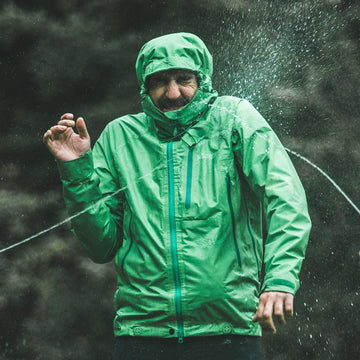
When water stops beading and the outer fabric darkens in the rain, it's time to reproof. Our waterproofs use PFAS-free water-repellent finishes, which need topping up more often than the older fluorinated ones did. That's normal, and it takes one extra step in the wash. See how to wash and reproof your waterproof for the full routine, and why you need to reproof your waterproof for how the finish works.
A small hole or snag is easy to patch at home:
- Clean and dry the fabric around the hole.
- Lay the jacket flat, peel the backing off a Stormsure patch and press it over the hole.
- Leave it for 15 minutes before you use it. After 30 minutes to an hour it's well stuck, and it'll go through the washing machine.
For a longer-lasting fix, our Repair Stations can heat-seal a patch on for you.
Softshells and walking trousers
Softshells and walking trousers rely on a water-repellent finish too, so they need the same care as a waterproof: a technical wash, no fabric conditioner, and a reproof when they start to soak through. Knees, seat and cuffs wear first, so check those. A spray-on reproofer lets you treat just the worn areas.
Don't put walking trousers through a hot wash with your everyday clothes. High heat and ordinary detergent are hard on stretch fabrics and water-repellent finishes alike.
Down jackets and sleeping bags
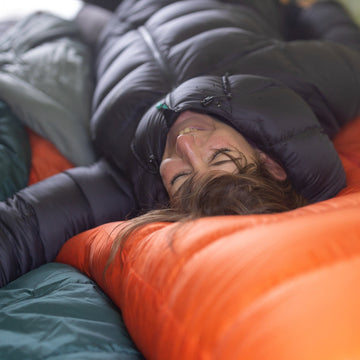
Dirty down doesn't loft, so it doesn't keep you as warm. Wash a down jacket or sleeping bag when it starts to look flat or smell, using a down-specific wash. A technical wash for waterproofs isn't made for down.
Drying is the slow part. Tumble dry on low with a couple of clean tennis balls or dryer balls to break up the clumps, and keep going until there are none left. A sleeping bag can take several hours. See how to wash a down jacket or sleeping bag for the step-by-step.
Merino and wool
Merino and lambswool need a cool, gentle wash with a wool detergent, no fabric conditioner, and a line or flat dry. Wool doesn't need washing as often as synthetic fabrics, because it holds on to smells until it's washed rather than giving them off. See how to wash merino and lambswool clothing.
Darn small holes early so they don't grow, and put wool away clean, because moths go for worn, unwashed wool first. Our Repair Stations can darn wool from any brand if you're not handy with a needle.
Tents, sleeping mats, wetsuits and boots
Tents. Never pack a tent away wet if you can help it, and clean it with nothing stronger than lukewarm water and a soft sponge. See our tent care guide for mould, drying and storage.
Sleeping mats. Open the valve fully before rolling a self-inflating mat, keep grit out of the valve, and store it unrolled or loosely rolled. See our sleeping mat care guide.
Wetsuits. Rinse in fresh water after every swim, dry inside out away from sun and heat, and store flat or on a wide hanger. See our wetsuit care and repair guide.
Boots. Brush off mud after every walk, condition leather so it doesn't dry out and crack, and reproof when water stops beading. See our leather and fabric boot care guide.
Storing kit between trips
How you store kit matters almost as much as how you wash it:
- Dry it fully first. Damp kit grows mould and smells, and down and wool suffer fastest.
- Keep it out of sun and heat. UV breaks down fabrics and water-repellent finishes, and heat cracks leather. A garage with big temperature swings is nearly as bad as outside.
- Store insulation loose. A stuff sack is fine for a trip, but months squashed tight damages the loft. Use a large cotton or mesh storage sack.
- Leave valves and zips open on mats and tents, so trapped moisture can escape.
Repair or replace
Most damage is worth fixing before you assume otherwise:
- Cosmetic wear, such as a scuff, a faded panel or a bit of pilling, needs nothing. Keep using it.
- Small damage, such as a tear, a broken buckle or a stuck zip, is almost always quicker and cheaper to repair than replace. Left alone, it gets bigger.
- Damage that affects safety or warmth, such as a tent that's stopped keeping rain out or a sleeping bag that's lost most of its loft, is worth a proper look rather than a home patch.
- When something really is finished, pass it on through our Continuum project instead of the bin.
We've run a repair service since 2004, on any brand, and fixed 12,657 items in 2025. Each of our stores has a Repair Station that can patch holes, with a heat patch for small tears or a sewn patch for bigger ones and stretch or natural fabrics, and fix zips. Book a Patch Repair online or bring your kit in.
For washing, post your kit to our Ambleside Wash Station (UK only). The Waterproof Wash and Reproof and Down Jacket Wash services take kit from any brand. See all our wash, reproof and repair services.
Related care guides
- How to wash and reproof your waterproof jacket: step by step, by machine or by hand
- Why you need to reproof your waterproof: how a water-repellent finish works and why it wears off
- How to wash a down jacket or sleeping bag: washing, drying and getting the loft back
- How to wash merino and lambswool clothing: temperatures, drying and looking after wool
Your next reads